


Prompt #
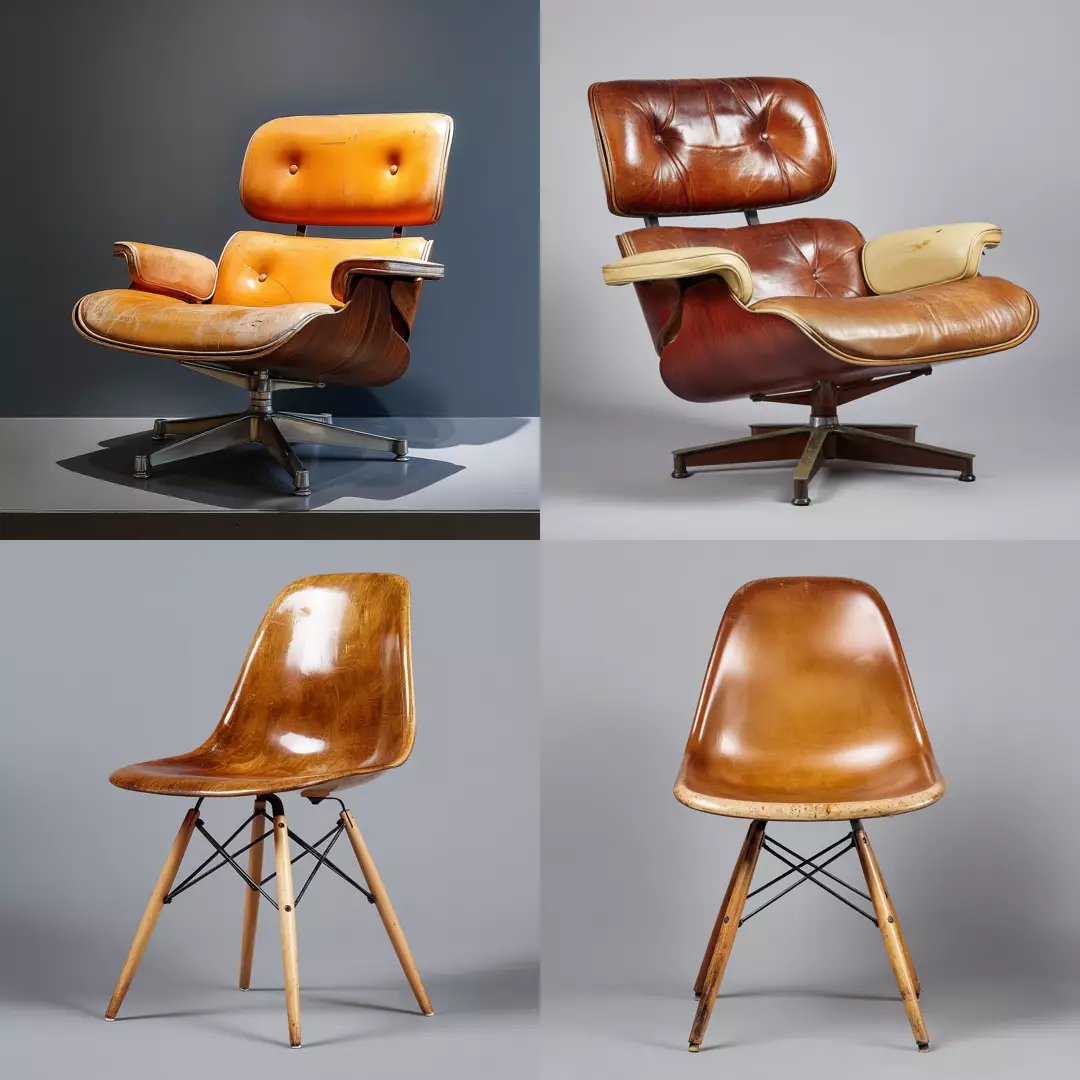
Chair designed by Charles Eames & Ray Eames, full frame --v 7
Charles and Ray Eames were a husband-and-wife design team whose work revolutionised furniture design and shaped the look of the 20th century. Best known for their elegant, mass-producible chairs made from moulded plywood and plastic, the Eameses combined craft, technology, and everyday function into timeless objects.
Their design legacy is global, and many of their most iconic pieces—such as the Lounge Chair and Ottoman or the fibreglass Plastic Side Chair—are still in production today. Beyond furniture, their creativity spilled into architecture, film, education, and exhibition design, making them two of the most influential figures in American modernism.
Working from their long-time studio in California, Charles (1907–1978) and Ray (1912–1988) Eames produced an incredibly broad body of work that stretched far beyond chairs. They created wartime medical splints from plywood, designed playful educational films, developed exhibitions like Mathematica, and built their own home—the Eames House—as part of the Case Study House Program. Their designs embraced the optimism of post-war America, yet remain culturally and aesthetically relevant today.
They were pioneers in industrial design, not just in terms of how things looked but in how they were made. The duo was among the first to explore mass production with a human touch. Their designs had warmth, wit, and a democratic sensibility—beautiful objects made to be used, not just admired.
The Eameses believed that design was not separate from life. Everything they touched—from a splint to a short film—was part of a larger idea: that design, at its best, improves everyday living. Their studio operated more like a creative playground than a traditional office, and their collaborative approach has influenced generations of designers.
Early Work and Materials Innovation #
When Charles and Ray moved to Los Angeles in 1941, they began experimenting with the then-novel idea of three-dimensional moulded plywood. Their early projects included leg splints for the U.S. Navy during World War II, which were designed to be lightweight, strong, and easily mass-produced. This practical exploration into materials laid the foundation for their future furniture.
The Eameses saw bent plywood as a kind of wonder material: affordable, adaptable, and full of design potential. The iconic LCW chair—short for Lounge Chair Wood—was one of their first major successes, demonstrating how plywood could be sculpted into gentle, ergonomic forms that looked and felt radically different from the heavy furniture of the past.
Later, as plastics became more available, the Eameses embraced fibreglass to create the Eames Molded Plastic Chair series. These chairs were revolutionary in that they could be produced in large quantities, configured with different bases, and used anywhere—from homes to schools to airports.
Signature Designs #
The Eames Lounge Chair and Ottoman (1956) is perhaps their most famous creation. With its combination of luxury materials—moulded plywood shells, leather cushions, and a fluid, reclined shape—it embodied their philosophy that “the details are not the details. They make the product.” Unlike earlier pieces, which focused on affordability, the Lounge Chair was an unapologetically premium product, designed to offer “the warm, receptive look of a well-used first baseman’s mitt.”
The Eames Plastic Side Chair (originally made from fibreglass, now produced in recyclable polypropylene) is another design classic. It’s lightweight, stackable, endlessly versatile, and still in production today by companies like Vitra and Herman Miller. The DSW version, with its wooden dowel legs, has become a modern-day design staple, seen in cafés, kitchens, and offices worldwide.
Cultural Impact #
Charles and Ray Eames weren’t just furniture designers—they were cultural producers. Their work reflected and helped shape a mid-century ideal: that good design should be for everyone. They believed in creating accessible, affordable, and beautiful objects. This approach defined the American mid-century modern movement and influenced how we think about living spaces, work environments, and design itself.
They also made significant contributions to the world of visual communication. Their short films—such as Powers of Ten (1977)—explored complex ideas in accessible ways, using visuals to teach concepts from physics to mathematics. Their exhibitions, including the IBM Pavilion at the 1964 World’s Fair, merged education, design, and entertainment into immersive experiences.
Their approach to design as a multidisciplinary, joyful act has had a lasting effect on creative culture. From Silicon Valley startups to Scandinavian furniture brands, echoes of the Eames philosophy can be felt across the design world today.
Legacy #
Charles and Ray Eames left behind more than just beautiful objects. They demonstrated that design could be functional, playful, and deeply human. Their studio, now operated by the Eames Foundation, remains a pilgrimage site for designers. Their home, the Eames House (Case Study House No. 8), still stands in the Pacific Palisades as a living testament to their ethos of simple, integrated design.
Today, their furniture is still produced under licence by Vitra in Europe and Herman Miller in the U.S., and their influence continues in everything from Apple’s product design to the modular interiors of contemporary architecture.
The Eameses didn’t just make furniture—they changed the way we think about living.
Inspired by Eames Office


